With domestic tourism on the rise and more visitors choosing to explore Wales’ beautiful coast and countryside, owning a holiday let has never been more appealing.
The country’s beautiful coastline, mountain landscapes, and characterful towns make it an attractive place for investors, but before you list your property, you need to understand holiday let planning permission in Wales.
Planning rules vary across local authorities, and in some areas, you may need formal permission to operate legally. Failing to check can lead to enforcement action, penalties, or restrictions on future use.
Doing your research early, speaking with planning officers, and staying up to date with Welsh Government changes will protect your investment from the start.
In this guide, we’ll take you through what you need to know about planning permission in Wales…
Skip to…
What is a Holiday Let?
A holiday let is a fully furnished property rented out to guests for short stays, typically ranging from one night to a few weeks.
In Wales, holiday lets are treated differently from standard residential properties. This means that planning permission in Wales, tax rules, and licensing requirements for holiday accommodation can vary significantly from those that apply to regular homes.
For a full overview of regulations affecting holiday lets in Wales, see our guide A Comprehensive Guide to Holiday Let Regulations in Wales.
💡TOP TIP: If your property is in a sensitive area or local housing is under pressure, include details on how your business will operate responsibly. This can improve approval chances.

Do You Need Planning Permission for a Holiday Let in Wales?
Whether you need planning permission in Wales for a holiday let depends on several factors, including the location of your property, how frequently it will be rented, and whether it is your main home. Even if you plan to let on a small scale, it’s always important to check with your local planning authority first.
Change of Use
Converting a residential home into a dedicated short-term holiday let may require planning permission in Wales due to a change of use. Local authorities assess each case individually, taking into account factors such as:
- How often the property is let
- Guest turnover (for example, new guests every few days)
- Potential impact on neighbours, including noise, parking, and waste
- Whether the property is your main residence
- Local housing pressures, particularly in popular tourist areas
Some councils view frequent short-term letting as a commercial activity. In these cases, planning permission may be required even if the property remains a standard-looking home.
For more on choosing the right property and understanding long-term investment potential, see Are Holiday Lets in South Wales a Good Investment?
💡TOP TIP: If you’re buying a property with the intention of letting it immediately, ask the estate agent or solicitor whether planning permission in Wales has already been granted. Doing this can save months of uncertainty and prevent costly delays.
What are the Planning Rules in Wales?
In Wales, properties are classified into different use classes to help local authorities manage how homes are occupied. This framework determines when planning permission in Wales is required for short-term holiday lets or second homes.
The key use classes are:
C3 – Main residence (occupied as a sole or principal home)
C5 – Second home (dwellinghouses not occupied as a principal residence)
C6 – Short-term holiday let (properties used as holiday accommodation for short stays)
Normally, moving a property between these use classes does not automatically require planning permission, thanks to permitted development rights. However, local councils can use Article 4 Directions to remove these rights in specific areas. In such cases, you will need to apply for planning permission in Wales before changing a property’s use class — for example, converting a main home into a holiday let (C6).
Article 4 Directions
Local councils in Wales can introduce Article 4 Directions, which remove permitted development rights in specific areas. This means that in these areas, you must apply for planning permission in Wales if you want to change a property’s use class — for example, converting a main home into a short-term holiday let (C6).
Article 4 Directions are more likely in areas such as:
- Popular coastal locations
- Tourist hotspots
- National parks and conservation areas
It’s important to note that not all Article 4 Directions are currently in force. For example, a large Article 4 Direction in Gwynedd was recently quashed by the High Court and therefore does not currently require planning permission. However, other Directions, such as those in the Eryri National Park area, are confirmed, meaning planning permission in Wales is required for changes of use there. While these examples are from North Wales, it’s essential to check with your local authority wherever your property is located, as Article 4 Directions can vary across the country.
For a deeper look at how these rules work, visit A Comprehensive Guide to Holiday Let Regulations in Wales.
💡TOP TIP: Before purchasing or letting a property, always check your local authority’s website to see if an Article 4 Direction applies. These Directions can vary by location and can change over time, especially in areas near national parks, conservation zones, or high-tourism coastal locations.
Upcoming Licensing Scheme in Wales
The Welsh Government is introducing a new national registration scheme for all visitor accommodation in Wales. Under the upcoming law, if you take bookings for overnight stays, you will be required to register your property with the Welsh Revenue Authority by autumn 2026, regardless of how often it is let.
In addition, legislation is underway to introduce a licensing scheme for holiday accommodation providers, which would require properties to meet specific safety and quality standards (such as gas and electrical safety, alarms and insurance), although this is not yet a legal requirement.
While these new rules are not directly about planning permission in Wales, they will become essential legal requirements for holiday let owners and should be part of your preparation if you’re considering letting a property.

How to Apply for Planning Permission
If you think you may need planning permission, the first step is to contact your local planning authority.
Here’s how the process usually works:
- Prepare your application via the Planning Portal or your council’s website.
- Submit detailed information, including: Intended use, guest capacity, parking and access, noise mitigation and waste management.
- Wait for your decision, usually within 8 weeks.
- Respond quickly if the council requests extra details.
For guidance on purchasing a holiday let and understanding the associated legal considerations, see A Guide to Buying a Holiday Let in South Wales.
💡TOP TIP: If your property is in a sensitive area or local housing is under pressure, include details on how your business will operate responsibly. This can improve approval chances.

Planning Permission for Farm Diversification Projects in Wales
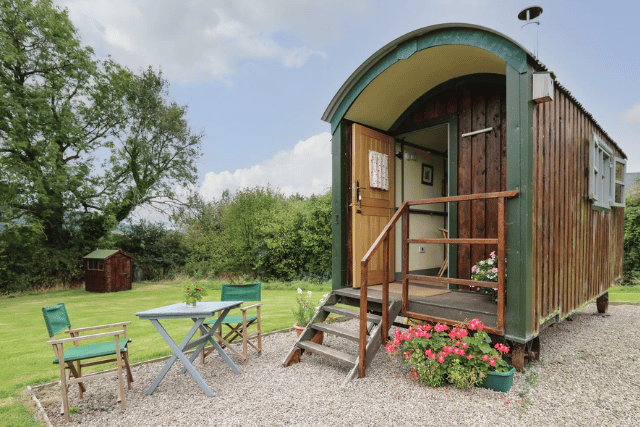
If you’re planning farm diversification in Wales, such as converting a barn into a holiday let or creating glamping pods, you may need planning permission in Wales. Local authorities consider factors like landscape impact, traffic, noise, and whether the project supports farm viability.
Some developments may benefit from permitted development rights, but these can be restricted by Article 4 Directions or local policies, especially in national parks and conservation areas.
Always engage your local planning authority early to identify potential issues and ensure your project meets all planning permission requirements in Wales.
For a deeper dive, head to our guide to farm diversification for more information.
Tips for a Smooth Planning Process
Do Your Research Early
Understanding your local policy before buying or converting a property can save time and avoid costly mistakes.
Speak to a Planning Consultant
This is recommended for:
- Conservation areas
- National parks
- Properties in Article 4 zones
- Complex use changes
Engage with the Community
Positive relationships with neighbours can reduce objections and speed up approval.
For strategies on running a successful holiday let business, including marketing tips and enhancing guest experiences, refer to A Guide to Running a Successful Holiday Let Business in South Wales.

FAQ: Holiday Let Planning Permission in Wales
1. Do I need planning permission for a holiday let in Wales?
It depends on how often you let your property and whether your local council has introduced Article 4 Directions or use class restrictions.
2. What is the new C6 class?
C6 is the new use class for short-term holiday lets in Wales. Changing into this class may require planning permission.
3. Does the 182-day rule affect planning permission?
No — it affects whether your property falls under business rates or council tax, not planning.
4. Do national park properties need extra permission?
Often yes. Areas like Pembrokeshire Coast and the Brecon Beacons have stricter policies.
5. Can I run a holiday let from my main home?
Sometimes, yes — but heavy letting may trigger a “material change of use,” requiring planning permission.
How Can We Help?
The rules around holiday let planning permission in Wales are changing quickly, and it’s vital to stay informed before making decisions.
Our expert team can help you understand:
- Whether your property needs planning permission
- How new Welsh use classes affect you
- Tax implications and licensing requirements
- Steps to convert your home into a compliant holiday let
For a comprehensive understanding of the rules and regulations, including health and safety requirements, visit Our Ultimate Guide: Rules and Regulations in Holiday Lets.
To talk to one of our holiday letting experts, who can explain what planning permission you need, complete the form below to request contact from our team. You’ll also receive a copy of our FREE Owner Guide.
Please Note: The information contained in this article was accurate at the time of writing, based on our research. Rules, criteria and regulations change all the time, so please contact our prospective new owner team if you’d like to hear how. Nothing in this article constitutes the giving of financial, tax or legal advice to you; please consult your own professional advisor (accountant, lawyer etc). in this regard. If we have referred within the article to a third-party provider of unregulated holiday let mortgages, this is due to the fact that such mortgages aren’t currently regulated by the FCA.
As a helpful reminder, your home may be repossessed if you do not keep up repayments on a mortgage, so again anything you decide to do in this particular area this is one on which you should take your own professional advice on too, as we aren’t providing and can’t provide you with this.
As a holiday letting owner you are responsible for compliance with health & safety laws, regulations and guidance, and for having suitable insurances in place (not Sykes Holiday Cottages or its brands). From time to time, Sykes shares information with you on the topic of health and safety and insurance. When it does so, it is not providing you with advice (legal, financial, tax or otherwise); please seek your own as you see fit. In addition, it is not making any representations or warranties about the information being complete or free from errors or inaccuracies. Sykes shall not be liable for any loss or damage arising under or in connection with your reliance on it.
